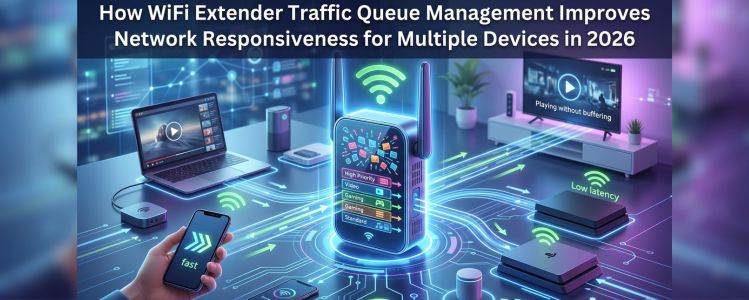
Modern homes and small offices often have dozens of connected devices competing for wireless bandwidth at the same time. Smartphones, laptops, smart TVs, gaming consoles, security cameras, and IoT devices can all create network traffic simultaneously. Effective traffic queue management helps WiFi extenders organize these data requests and maintain better responsiveness. During Routerlogin.net setup, users can configure compatible network settings, while Netgear extender setup can help expand wireless coverage and support better connectivity across different areas of a home or office.
Traffic queue management is a network technology that organizes data packets waiting to be transmitted across a wireless connection. When multiple devices send and receive information simultaneously, an extender may receive more traffic than it can immediately process. Instead of handling every request randomly, traffic queue management helps determine how packets should be processed and transmitted.
This can improve:
A modern connected home can have many devices using bandwidth simultaneously. For example, one family member may be streaming a 4K video while another is playing an online game. At the same time, security cameras may upload video footage and smartphones may synchronize cloud data.
Without effective traffic management, high-volume applications can consume significant bandwidth and create delays for other devices. Traffic queue management helps prevent one activity from overwhelming the wireless network.
A WiFi extender receives data requests from connected devices and forwards traffic between those devices and the primary router. When several requests arrive at once, the extender can temporarily organize packets into queues.
The system can then process traffic according to factors such as:
This structured approach can reduce unnecessary congestion and help important traffic reach its destination more efficiently.
Network responsiveness is particularly important for applications that depend on quick communication. Online gaming, video calls, remote work applications, and smart home controls can be affected by delays even when overall download speeds appear adequate.
Traffic queue management can help prioritize time-sensitive communication so that smaller, important packets do not remain behind large downloads or uploads. This can make the network feel more responsive during periods of heavy usage.
Streaming services can consume substantial bandwidth, especially when multiple devices are playing high-resolution content.
Imagine a household where:
Without proper traffic organization, these activities can compete aggressively for available bandwidth. Queue management can help distribute traffic more efficiently, allowing connected entertainment devices to maintain more consistent performance.
Online gaming requires more than high download speeds. Low latency and consistent packet delivery are essential for responsive gameplay. Large downloads running in the background can compete with gaming traffic. If gaming packets experience delays, players may notice:
An intelligently managed traffic queue can help time-sensitive gaming packets move through the network more efficiently.
Remote work has made stable wireless connectivity increasingly important. Video meetings require continuous two-way communication between the user’s device and remote servers. At the same time, other household devices may be consuming bandwidth.
Traffic queue management can help prevent large background transfers from unnecessarily interfering with video conferencing traffic. This may result in a more consistent experience for:
The primary router remains responsible for managing the broader network, while an extender helps improve wireless coverage in areas where the router’s signal may be weaker. During Routerlogin.net setup, users can access compatible router configuration interfaces and review available network management options.
Proper router configuration can complement extender traffic management by creating a more organized network environment. Users should always follow the documentation specific to their router model because available settings can vary.
A properly positioned extender can help connected devices maintain a stronger wireless connection, which may reduce unnecessary retransmissions and improve communication efficiency. However, an extender cannot create additional internet bandwidth. Its primary purpose is to improve wireless coverage and connectivity.
Not every connected device has the same network requirements. A smart thermostat may send very small amounts of data, while a gaming console or streaming device may require considerably more bandwidth.
Traffic queue management can help organize these different types of network activity. Priority-based handling can be particularly useful when several applications compete for bandwidth at the same time.
Congestion occurs when more traffic is attempting to use available network resources than the network can efficiently handle. Traffic queue management does not eliminate bandwidth limitations, but it can help control how traffic is handled during busy periods. This can make network behavior more predictable and reduce the impact of simultaneous high-bandwidth activities.
Even advanced traffic management cannot compensate for extremely weak communication between the extender and the primary router. The extender should generally be placed where it can receive a reliable signal from the main router while still providing useful coverage to the target area.
Poor placement can result in:
Therefore, proper placement should be considered an essential part of any Netgear extender setup.
Firmware updates can introduce performance improvements, compatibility changes, security fixes, and networking enhancements. Keeping supported networking equipment updated can help ensure that traffic-management features operate according to the manufacturer’s latest implementation.
Before updating firmware, users should verify the correct model and follow the manufacturer’s instructions carefully.
Smart homes increasingly depend on reliable wireless communication. Connected devices may include:
Traffic queue management can help organize communications between these devices and the broader network. This becomes especially useful as the number of connected devices continues to grow.
The main objective of traffic queue management is not simply to increase internet speed. Instead, it focuses on using available network resources more effectively.
Potential benefits include:
This makes queue management an increasingly valuable part of modern wireless networking.
Users can combine traffic management with several other practices to improve their wireless environment. Consider:
These steps can help create a more stable and responsive network.
As homes become increasingly connected, wireless networks will need to handle more simultaneous traffic. Future WiFi systems are expected to become more intelligent about understanding application requirements, device behavior, congestion levels, and network conditions.
Automated traffic classification and adaptive queue management could make it easier for networks to respond dynamically to changing workloads. This evolution will become increasingly important as smart homes, remote work, cloud services, gaming, and high-resolution streaming continue expanding.
WiFi extender traffic queue management can play an important role in improving network responsiveness when multiple devices compete for wireless resources. By organizing data packets and managing traffic more intelligently, it can help reduce the effects of congestion and support smoother performance for applications such as streaming, gaming, video calls, and smart home devices.
A properly configured network is equally important. Completing Netgear extender setup correctly, maintaining suitable extender placement, and using appropriate router configuration through Routerlogin.net setup can provide a stronger foundation for reliable wireless connectivity in 2026.
As the number of connected devices continues increasing, intelligent traffic management will become an increasingly important part of maintaining a responsive and efficient WiFi environment.

Dave Francis is a WiFi network expert and a technical writer dedicated to helping users optimize their home networks. He focuses on providing clear, actionable steps to help readers get the best service out of their devices. With the background in Information-Technology and passion for WiFi devices, he provides practical advice and solutions for setting up and managing Wi-Fi devices. He breaks down technical issues and offers simplified solutions through easy guides and tutorials.


