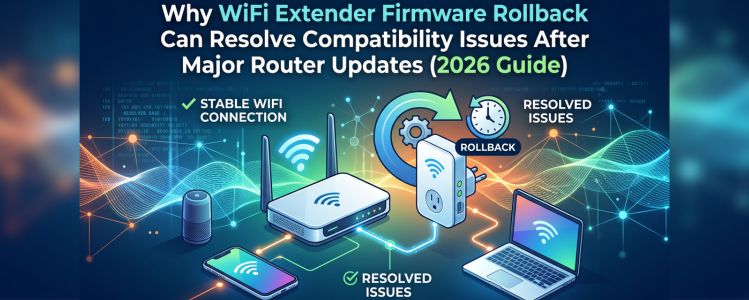
Firmware updates generally improve security, stability, and performance, but occasionally a major router update can introduce compatibility issues between your router and WiFi extender. In some situations, performing a firmware rollback on the extender can restore stable connectivity until a newer compatible update becomes available. Before making any changes, users should check for the latest netgear firmware update and manage router settings through Routerlogin.net to determine whether a rollback is truly necessary.
Firmware rollback is the process of installing an earlier version of a device’s firmware.
Instead of running the latest software, the device temporarily returns to a previous stable version that may work better with existing hardware or network configurations.
While firmware updates are usually recommended, rollback can sometimes restore reliable operation if a recent update causes unexpected problems.
Modern routers receive firmware updates to add new features, improve security, and enhance performance.
However, these updates may occasionally change:
If the WiFi extender has not yet received a matching update, communication between the two devices may become unstable.
Following a major router update, users may notice:
These symptoms often indicate software compatibility rather than hardware failure.
Before considering a rollback, always verify whether a newer netgear firmware update is available.
Manufacturers frequently release follow-up updates that resolve compatibility problems introduced by earlier firmware versions.
Installing the latest approved firmware is generally the safest solution.
The router management interface available through Routerlogin.net allows users to review important network settings.
From the dashboard, you can:
Reviewing these settings often helps identify whether the issue is related to firmware or network configuration.
Firmware rollback should only be considered after basic troubleshooting has been completed. It may be appropriate if:
Following manufacturer guidance helps reduce the risk of installation errors.
Before rolling back firmware, try these solutions:
Many connectivity problems can be resolved without changing firmware versions.
Although rollback can occasionally help, running outdated firmware for long periods is not recommended.
Current firmware provides:
Once the manufacturer releases a corrected version, upgrading again is usually the best long-term solution.
To minimize update-related issues:
These practices reduce the likelihood of compatibility problems.
Networking manufacturers continue improving firmware development.
Future firmware management may include:
These technologies aim to make future updates safer and more reliable.
Firmware updates remain essential for maintaining network security, performance, and reliability. However, occasional compatibility issues may arise after major router software upgrades, particularly when WiFi extenders have not yet received matching firmware.
Before considering a rollback, users should always check for the latest netgear firmware update and review router settings through Routerlogin.net. In many cases, updated firmware or simple configuration adjustments resolve connectivity problems without reverting to older software. When performed carefully and only under appropriate circumstances, firmware rollback can temporarily restore network stability until a permanent software solution becomes available.

Dave Francis is a WiFi network expert and a technical writer dedicated to helping users optimize their home networks. He focuses on providing clear, actionable steps to help readers get the best service out of their devices. With the background in Information-Technology and passion for WiFi devices, he provides practical advice and solutions for setting up and managing Wi-Fi devices. He breaks down technical issues and offers simplified solutions through easy guides and tutorials.


